
Goats for Forestry Management: Natural Land Clearing
Discover how using goats for forestry management offers a self-sufficient approach to land clearing. Explore effective forestry management techniques that promote sustainability and eco-friendliness.
BACKYARD HUSBANDRY
Peggy
6/9/2026
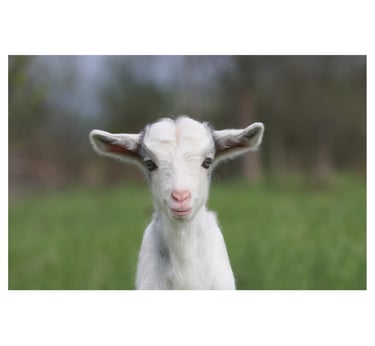
Using Goats for Forestry Management: A Natural, Self-Sufficient Approach to Land Clearing
Goats have proven to be remarkably effective natural land managers, offering a sustainable alternative to chemical herbicides and mechanical clearing equipment for forestry management. These resilient animals bring multiple benefits to woodland restoration that far exceed simple brush control, as documented in both scientific research and practical homesteading applications.
The Science Behind Goat-Assisted Forestry
Research has demonstrated that goats play a significant role in seed dispersal and forest regeneration. A study published in Frontiers in Ecology and the Environment found that tree-climbing goats in Morocco inadvertently plant new forests by spitting out seeds from argan fruits they consume [A-1]. This process, known as endozoochory through regurgitation, allows seeds to be dispersed far from their parent plants, giving them a greater probability of survival [A-1]. The goats spend approximately 74 percent of their grazing time in the treetops, and seeds may remain in their stomachs for days before being expelled, enabling wider distribution [A-2].
Practical Applications for Land Clearing
At Zaytauna Farm in New South Wales, Australia, farmers have successfully employed goats to clear weed-tree-infested areas for reforestation. By confining goats in areas containing both pasture and weed-tree-infested forest edge, the animals naturally consumed parts of invasive trees within their reach, eventually weakening the weed stumps until they died [A-1]. The goats' digestion converted these undesirable plants into nutrient-rich manure that fertilized the soil, paving the way for reforestation with high-quality trees [A-1].
This approach aligns with the "stacking functions" technique used by integrated farmers. As John Hayden of The Farm Between in Vermont explains, managing multipurpose livestock minimizes labor and fertilizer requirements while achieving multiple objectives simultaneously [A-4]. Goats are particularly adept at handling tough vegetation like woody shrubs and brambles, including noxious plants such as kudzu, poison ivy, and poison oak [A-4].
Integration with Homestead Operations
For those seeking self-reliance, dairy goats serve dual purposes in forestry management and food production. Nigerian Dwarf goats are ideal for beginners, requiring only one-fourth the space of full-sized dairy goats while providing nutritious milk for cheese making [A-5]. These smaller breeds need at least 16 square feet per goat and should be kept in pairs, as they require companionship to remain happy [A-5]. Female goats that are at least eight months old can be bred once yearly, typically in fall, and will lactate for up to ten months after giving birth [A-6].
The housing requirements for goats used in forestry work are minimal. A simple three-sided shelter protects them from wind and rain, with at least nine square feet of indoor space per goat for sleeping [A-6]. In moderate climates, goats can be allowed to roam freely or tethered to cinder blocks in different areas of your property [A-6].
Feeding Considerations During Forestry Work
Goats naturally browse on brush, weeds, leaves, and undergrowth that cows and sheep typically ignore [A-6]. However, ensure your forage area is free from plants toxic to goats. When fresh forage is unavailable, provide good-quality hay or tree branches. Goats require at least 4 gallons of clean water daily, with increased amounts during hot weather [A-6]. For supplemental feeding, morning rations of organic alfalfa pellets and evening grain help maintain their health during intensive land-clearing operations [A-7].
Balancing Goat Populations
While goats are remarkably effective for forestry management, maintaining ecological balance is crucial. Biologist Jose Fedriani, co-author of the seed dispersal study, emphasizes that surplus goat populations can prevent forests from flourishing by consuming young trees before they mature [A-2]. The key, as Fedriani states, is maintaining equilibrium between goat numbers and tree populations [A-2].
References
REFERENCES:
(Note: Most documents in this collection were archived via OCR. Expect some titles to be incomplete, and author names may show OCR errors from time to time. This is an unavoidable artifact of using archived knowledge.)
Articles:
[A-1] "Tree-climbing goats help sow new forests by SPITTING out the seeds scientific study shows - NaturalNews.com, August 25, 2018" by NaturalNews.com
[A-2] "Must watch_ Tree-climbing goats perch on branches like birds - NaturalNews.com, June 10, 2017" by NaturalNews.com
[A-3] "Life expectancy drops 37 after getting COVID jabbed peer reviewed research shows - NaturalNews.com, July 08, 2024" by NaturalNews.com
[A-4] "Reduce the amount of labor needed in your homestead by turning to multipurpose livestock - NaturalNews.com, September 16, 2018" by NaturalNews.com
[A-5] "It can be done! 5 Animals we recommend you raising if youre a novice farmer - NaturalNews.com, December 15, 2017" by NaturalNews.com
[A-6] "Homesteading 101_ How to raise dairy goats off-grid - NaturalNews.com, May 07, 2020" by NaturalNews.com
[A-7] "Prepping and livestock tips_ 5 Animals to raise on your homestead - NaturalNews.com, February 21, 2023" by NaturalNews.com