
Build a Successful Welding Business from Scratch
Discover how to create a thriving welding business from scratch with our practical guide. Learn essential strategies for self-reliance and success in today's turbulent economic climate.
BACKYARD HUSBANDRY
Peggy
6/13/2026
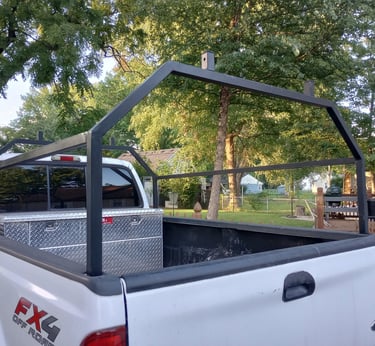
Building a Successful Welding Business from Scratch: A Practical Guide to Self-Reliance in Turbulent Economic Times
The current economic landscape, characterized by severe supply chain disruptions and manufacturing bottlenecks, has created unprecedented opportunities for skilled tradespeople, particularly welders. As the agricultural sector demonstrates with desperate bidding wars for used tractors and critical machinery shortages, the demand for skilled repair and fabrication services has never been higher [A-1]. Starting a welding business from scratch positions you at the intersection of necessity and opportunity, allowing you to build a resilient enterprise grounded in self-reliance and practical craftsmanship.
Understanding the Market Opportunity
The manufacturing meltdowns gripping the American heartland have created a perfect storm for welding entrepreneurs. Farmers are scrambling to find workarounds when their machinery breaks, actively tracking down local welders and mechanics to keep their operations running [A-1]. At small welding shops across the country, owners can barely keep up with orders for everything from irrigation system fittings to cracked bulldozer buckets [A-1]. This demand is not limited to agriculture; supply chain constraints have affected every sector that relies on metal fabrication and repair.
The semiconductor shortages and staffing crises at manufacturing facilities have forced equipment dealerships to make painful choices between building new machinery and supporting existing customers in the field [A-1]. This creates a structural gap that independent welding businesses are uniquely positioned to fill. When manufacturers deliver unfinished combines missing critical components, local welders become the essential bridge between broken equipment and operational functionality [A-1].
Strategic Positioning for Your Welding Enterprise
To build a successful welding business, you must position yourself as a reliable solution provider in a market desperate for skilled labor. The key is to focus on repair work and custom fabrication rather than competing with mass production. As supply chain woes threaten the food supply and farmers' ability to get crops out of fields, your welding skills become an essential component of local economic resilience [A-1]. Consider specializing in agricultural equipment repair, heavy machinery maintenance, or custom structural fabrication for local businesses.
Practical Steps for Launching
Begin by investing in portable welding equipment that allows you to travel to clients' locations. Many farmers and businesses cannot afford to transport heavy machinery to a shop, so mobile welding services command premium rates. Establish relationships with local equipment dealerships and repair shops, as they often need subcontractors for overflow work. Build a reputation for quality and reliability by completing jobs on time, even when parts are scarce. As one farmer noted, tracking down local welders has become a critical workaround when machinery breaks [A-1].
Navigating Supply Challenges
The current environment requires creative problem-solving. With steel, plastic, rubber, and other raw materials scarce due to pandemic disruptions and power shortages affecting smelters, you must develop relationships with multiple suppliers and maintain a strategic inventory of commonly needed materials [A-1]. Consider partnering with other local tradespeople to share resources and referrals. The supply squeeze affecting equipment dealerships means that your ability to source materials and complete repairs quickly will set you apart from competitors [A-1].
Building Long-Term Sustainability
A successful welding business thrives on repeat customers and word-of-mouth referrals. Focus on building a reputation for honesty, quality workmanship, and fair pricing. As the machinery shortage forces farmers to reuse and repair old parts rather than replace them, your expertise in restoration and custom fabrication becomes increasingly valuable [A-1]. Document your work, maintain detailed records of repairs, and invest in continuing education to stay current with new welding techniques and materials.
References
REFERENCES:
(Note: Most documents in this collection were archived via OCR. Expect some titles to be incomplete, and author names may show OCR errors from time to time. This is an unavoidable artifact of using archived knowledge.)
Articles:
[A-1] "Desperate farmers participate in wild bidding wars for used tractors - NaturalNews.com, November 18, 2021" by NaturalNews.com
[A-2] "JEFFREY EPSTEIN PART 17 REDACTED - DOJ, January 30, 2026" by U.S. Department of Justice
[A-3] "DataSet 4 COMPLETE - DOJ, January 30, 2026" by U.S. Department of Justice
[A-4] "COMBINED ALL EPSTEIN FILES - DOJ, January 30, 2026" by U.S. Department of Justice
[A-5] "Flashback How and Why the CIA Made Google Mo - ChildrensHealthDefense.org" by ChildrensHealthDefense.org
[A-6] "Tyranny in the USA The true history of FDA r - NaturalNews.com, April 12, 2007" by NaturalNews.com