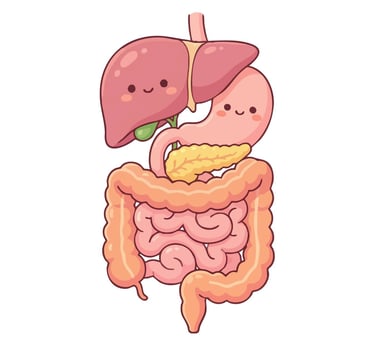
Digestive System
Read/Download our Books for Free:
Comprehensive Breakdown & Natural Support Strategies:
1. Mouth / Tongue / Salivary Glands
Structure:
Saliva contains ptyalin, an enzyme initiating starch digestion, activated by chewing ([B-1]).
Three pairs of salivary glands (parotid, submaxillary, sublingual) produce ~3 pints daily ([B-1]).
Tongue shapes food into a bolus and houses taste buds linked to vagus nerve reflexes ([S-1]).
Function:
Mechanical breakdown via chewing increases surface area for enzymatic action ([B-1]).
Cephalic phase digestion primes stomach acid secretion via vagal signals ([S-1]).
Pathology:
Gluten sensitivity may cause oral lesions (canker sores, enamel erosion) due to immune reactions ([A-7]).
Processed foods degrade salivary enzymes, impairing pre-digestion ([A-4]).
Natural Support:
Black pepper oil stimulates saliva flow; ginger reduces oral inflammation ([A-1], [A-15]).
Fermented foods (e.g., sauerkraut) boost oral microbiome diversity ([A-6]).
2. Esophagus
Structure:
Muscular tube (~10–12 cm) with peristaltic waves pushing food to stomach ([B-1]).
Lower esophageal sphincter (LES) prevents acid reflux when functional ([B-9]).
Function:
Transports food in 5–10 seconds via sequential muscle contractions ([B-1]).
Vago-vagal reflexes coordinate LES relaxation with gastric accommodation ([S-1]).
Pathology:
GERD often stems from LES dysfunction exacerbated by gluten-induced zonulin release ([A-7]).
Esophagitis from acid reflux correlates with NSAID overuse ([A-15]).
Natural Support:
Aloe vera juice soothes inflamed mucosa; slippery elm coats the esophagus ([A-15]).
Apple cider vinegar (1 tsp in water) may restore stomach acid balance ([A-2]).
3. Stomach
Structure:
Holds 3–5 pints; lined with mucous cells protecting against HCl ([B-1]).
Parietal cells secrete HCl; chief cells produce pepsinogen ([B-9]).
Function:
Gastric juice (HCl, pepsin, rennin) digests proteins; acid pH (~1.5–3.5) sterilizes food ([B-1]).
Chyme (liquid food mix) exits via pyloric sphincter ([B-9]).
Pathology:
Peptic ulcers from H. pylori or NSAIDs erode mucosal lining ([A-15]).
Gastroparesis (delayed emptying) linked to vagal nerve damage ([A-13]).
Natural Support:
Cabbage juice (high in glutamine) heals ulcers; licorice root (DGL) reduces inflammation ([A-15]).
Betaine HCl supplements aid protein digestion if low stomach acid ([A-4]).
4. Small Intestine (Duodenum, Jejunum, Ileum)
Structure:
Duodenum receives bile (liver) and pancreatic enzymes ([B-9]).
Villi/microvilli increase absorptive surface to ~2,700 sq ft ([B-1]).
Function:
Bile emulsifies fats; pancreatic lipase/amylase/protease complete digestion ([B-9]).
Lacteals absorb dietary fats into lymph ([S-3]).
Pathology:
Leaky gut from lectins (wheat germ agglutinin) disrupts tight junctions ([A-10]).
Gallstones impair bile flow, causing fat malabsorption ([A-8]).
Natural Support:
L-glutamine (5g/day) repairs intestinal lining; bone broth provides collagen ([A-6]).
Digestive enzymes (e.g., bromelain, papain) aid breakdown ([A-4]).
5. Large Intestine (Colon, Rectum)
Structure:
Colon absorbs water/electrolytes; rectum stores feces ([B-9]).
Microbiome (100 trillion bacteria) ferments fiber into SCFAs ([A-6]).
Function:
Forms stool via mass peristalsis; eliminates waste in 18–24 hrs ([B-1]).
Goblet cells secrete mucus for lubrication ([S-3]).
Pathology:
Dysbiosis (Candida/SIBO) from processed foods or antibiotics ([A-6]).
Diverticulosis from low-fiber diets causing mucosal herniation ([A-3]).
Natural Support:
Psyllium husk (fiber) bulks stool; probiotics (Lactobacillus) restore flora ([A-6]).
Coffee enemas stimulate bile flow and detox ([A-5]).
6. Liver
Structure:
Largest gland; filters 1 quart blood/minute ([B-9]).
Produces bile (stored in gallbladder) ([B-9]).
Function:
Detoxifies blood; synthesizes proteins/clotting factors ([B-9]).
Bile salts (cholic/chenodeoxycholic acid) emulsify fats ([S-2]).
Pathology:
Fatty liver from excess fructose (HFCS) or alcohol ([A-8]).
Cirrhosis from chronic toxicity (e.g., acetaminophen) ([B-9]).
Natural Support:
Milk thistle (silymarin) regenerates hepatocytes; dandelion root boosts bile ([A-8]).
Beetroot juice supports phase-2 detox pathways ([A-2]).
7. Gallbladder
Structure:
Pear-shaped sac storing/concentrating bile ([B-9]).
Function:
Releases bile via common bile duct into duodenum ([B-9]).
Pathology:
Gallstones (cholesterol crystals) block ducts, causing jaundice ([A-8]).
Post-cholecystectomy syndrome (chronic diarrhea) from unregulated bile ([A-11]).
Natural Support:
Lecithin (soy/sunflower) prevents stone formation; apple juice fasts dissolve stones ([A-8]).
8. Pancreas (Exocrine)
Structure:
Secretes bicarbonate (neutralizes chyme) + digestive enzymes ([B-9]).
Function:
Trypsin/chymotrypsin (proteins); lipase (fats); amylase (carbs) ([B-9]).
Pathology:
Pancreatitis from alcohol/triglycerides; enzyme deficiency causes malnutrition ([A-9]).
Natural Support:
Pancreatic enzyme supplements (e.g., Creon) aid digestion ([A-9]).
Bitter herbs (gentian, wormwood) stimulate enzyme release ([A-4]).
9. Goblet Cells
Structure:
Scattered in intestinal epithelium; secrete mucin ([S-3]).
Function:
Protects against mechanical/acidic damage; traps pathogens ([S-3]).
Pathology:
Ulcerative colitis depletes mucin, exposing mucosa to bacteria ([A-3]).
Natural Support:
Marshmallow root (mucilaginous) soothes irritated lining ([A-15]).
Key Threats & Solutions
Industrialized Foods:
Processed carbs feed pathogenic bacteria, causing dysbiosis ([A-6]).
GMOs may increase lectin toxicity, worsening leaky gut ([A-10]).
Pharmaceuticals:
PPIs (acid blockers) cause SIBO by altering gut pH ([A-13]).
NSAIDs erode mucosal barriers, triggering ulcers ([A-15]).
Natural Protocols:
Fasting (16–24 hrs) resets microbiome ([A-5]).
Clay/bentonite binds toxins; activated charcoal absorbs endotoxins ([A-5]).
References
REFERENCES:
(Note: Most documents in this collection were archived via OCR. Expect some titles to be incomplete, and author names may show OCR errors from time to time. This is an unavoidable artifact of using archived knowledge.)
Science Papers:
[S-1] "Unknown" by RICHARD C. ROGERS D.M. McTIGUE AND G.E. HERMANN (Neuroscience and Biobehavioral Reviews Vol. 20 No. 1 pp. 57-66 1996)
[S-2] "In vitro degradation and in vivo passage kinetics of carvacrol, thymol, eugenol and trans-cinnamaldehyde along the gastrointestinal tract of piglets" by Joris Michiels, Joris Missotten, No ¨el Dierick, Dirk Fremaut, Peter Maene and Stefaan De Smet (Journal of the Science of Food and Agriculture J Sci Food Agric 88:2371–2381 (2008))
[S-3] "Absorption of Protein Molecules by the Small Intestine of the Bullfrog Tadpole, Rana catesbeiana" by KEIJI SUGIMOTO YASUAKI ICHIKAWA AND ITSUO NAKAMURA[] (Journal of Experimental Zoology 215 53-62 (1981))
[S-4] "Supplementation of pig diet with algal fibre changes the chemical and physicochemical characteristics of digesta" by Christine Hoebler, Fabienne Guillon, Be´atrice Darcy-Vrillon, Pierre Vaugelade, Marc Lahaye, Emily Worthington, Pierre-Henri Dueé, Jean-Luc Barry (Journal of the Science of Food and Agriculture 2000)
[S-5] "Intestinal Transfer of Growth Hormone Into the Circulatory System of the Rainbow Trout, Salmo gairdneri: Interference by Granule Cells" by PIERRE-YVES LE BAIL, MARIE-FRANCE SIRE, AND JEAN-MARIE VERNIER (The Journal of Experimental Zoology 251:101-107 (1989))
Books:
[B-1] "Effective living" by Turner C E Clair Elsmere 1890
[B-2] "Animal Communication" by Anneliese Hagemann
[B-3] "Body soul a womans guide to staying young" by Smith Karen Karen Ann
[B-4] "Anatomy Demystified" (author unknown)
[B-5] "Biology in action" by Poole Marion C
[B-6] "Biology investigations" by Otto James Howard
[B-7] "The Body" by Alan E Nourse and the editors of time-life books
[B-8] "Water Can Undermine Your Health" by Norman Walker
[B-9] "Iridology The Science and Practice in the Healing Arts" by Bernard Jensen
Articles:
[A-1] "9 Reasons to use black pepper essential oil a natural antibacterial ingredient that boosts digestive health - NaturalNews.com, May 29, 2021" by NaturalNews.com
[A-2] "The digestive system 101 Heres how it reall - NaturalNews.com, July 23, 2012" by NaturalNews.com
[A-3] "Gastrointestinal bleeding - causes side effects and treatments at NaturalPediacom - NaturalNews.com, April 16, 2018" by NaturalNews.com
[A-4] "The Power of Enzymes - Discover the Key to Go - NaturalNews.com, February 25, 2008" by NaturalNews.com
[A-5] "CSOB 6th Edition Ebook" by TheTruthAboutCancer.com
[A-6] "The Gut Microbes and Poop" by GreenMedInfo.com
[A-7] "Glutenfree Fallacy Reveals Widespread Grain Addiction" by GreenMedInfo.com
[A-8] "Bile Duct Congestion Can Lead to Intestinal D - NaturalNews.com, May 02, 2008" by NaturalNews.com
[A-9] "Enzyme Therapy for Cancer And Digestive Diseases" by GreenMedInfo.com
[A-10] "Lectins Phytates And Autoimmune Disease Separating Fact from Fiction" by GreenMedInfo.com
[A-11] "What conventional medicine wont dare tell yo - NaturalNews.com, May 22, 2005" by NaturalNews.com
[A-12] "TTAC LE2019 Full Transcripts Book 191122" by Various
[A-13] "Gastroparesis - causes side effects and treatments at NaturalPediacom - NaturalNews.com, April 03, 2018" by NaturalNews.com
[A-14] "QFTC Final Chapter Episode Transcripts" by TheTruthAboutCancer.com
[A-15] "Understanding peptic ulcers and how to treat them at home - NaturalNews.com, February 19, 2018" by NaturalNews.com